Australia’s prestige property market continues its gradual recalibration, with the national HTW Prestige Index easing to 58 out of 100 this month, down from 61 in May and June. The Index is now sitting at its lowest reading since we launched the monitor in February this year, when the equivalent score was 66. The softening has been steady rather than sharp, unfolding in incremental steps over recent months as successive interest rate rises, tighter credit conditions and shifting tax settings work their way through buyer psychology.
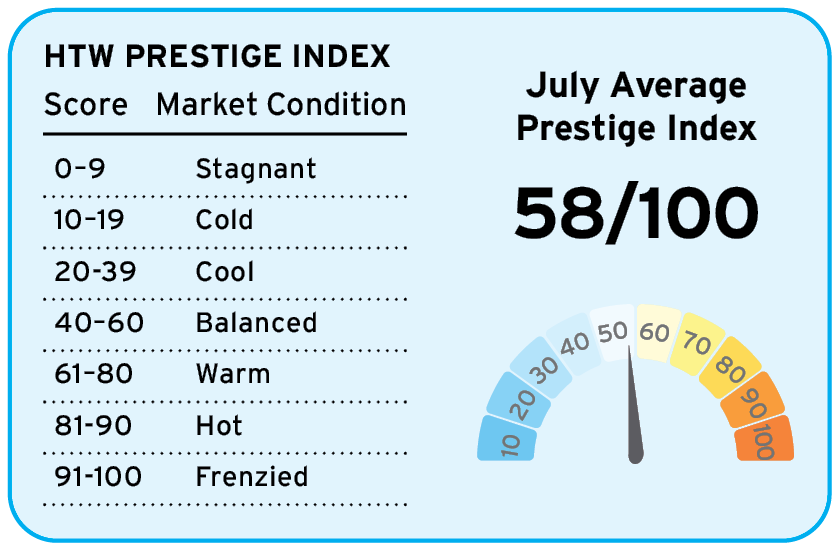
The divergence between our cities remains the defining feature of this edition’s commentary. Perth continues to lead the country at 80, sustained by chronic undersupply in the western suburbs and a buyer pool still willing to compete hard for quality stock. Adelaide has eased to 65 from 70 in June, while Brisbane holds steady at 62, both still comfortably in Warm territory. Gold Coast has softened to 65 following its debut at 75 last month, reflecting a broader easing in general market activity now filtering into the prestige segment. Sydney remains anchored at 40, and Melbourne has slipped further to 35, both firmly in Balanced-to-Cool territory as vendor and buyer expectations continue to diverge.
The drivers behind this softening are now well established. Successive cash rate increases through 2026, the Federal Budget’s changes to negative gearing and capital gains tax settings impacting overall confidence, and ongoing geopolitical instability in the Middle East are combining to sharpen price sensitivity even among high-net-worth purchasers. Sydney’s auction clearance rate falling below 50 per cent in June and July, against the mid-to-high 60s recorded in the same period last year, is a telling barometer of this shift.
What continues to hold firm, regardless of city, is the premium commanded by genuinely exceptional, turnkey property. It is secondary stock, such as homes requiring capital expenditure or positioned outside tightly held precincts, where the market is asking the hardest questions, with longer selling periods and growing vendor discounting the result.