The narrative of regional migration is evolving. While the initial “exodus” from capital cities was often painted as a pursuit of lifestyle, the latest data from the CBA RAI September 2025 Regional Movers Index suggests a more pragmatic driver is now at play: a calculated search for value.
For those analysing market movements, the headline figures are telling, but the underlying currents reveal where the real pressure points and opportunities are forming in the Australian property landscape.
1. The “Ripple Effect” in Action: Market participants have long understood that when a primary hub becomes saturated, demand doesn’t disappear; it displaces. We are seeing a textbook example of this “spillover effect” right now.
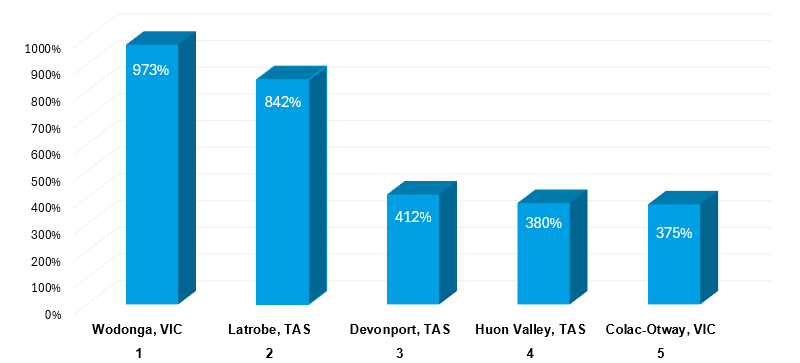
Historically, Albury (NSW) has been a high-growth regional centre. However, as entry costs have risen, the market heat has shifted directly across the border. Wodonga (VIC) has recorded a massive 973% annual increase in net internal migration inflows.
This confirms a critical trend: buyers are being priced out of established regional areas and are actively targeting adjacent markets with greater affordability headroom.
2. Fundamentals Over Sun: While the Sunshine Coast remains a volume heavy-hitter, the growth narrative is pivoting South. The data shows a distinct preference emerging for Victoria and Tasmania, driven by cost-of-living pressures rather than just climate.
The annual growth percentages in these southern markets are staggering:
• Latrobe (TAS): up 842%.
• Devonport (TAS): up 412%.
• Huon Valley (TAS): up 380%.
This “Southern Shift” indicates that the market is placing a higher preference on affordability and capacity for growth than we have seen in previous cycles, where “sunbelt” premiums dominated decision-making.
3. The Supply Constraint: A “Lock-in” Effect: Perhaps the most significant metric for market depth is the decline in inter-regional mobility. While net migration from capitals to regions is up 11.8%, the movement within regions has dropped by 1.4%.
This signals a tightening of stock. Newcomers are arriving, but existing residents are staying put. When you combine increased inflows with a reluctance from locals to sell or relocate, you create a supply-demand imbalance that generally supports stronger housing prices. The days of high turnover in these regional pockets appear to be slowing.
4. The Western Australia Pivot. Finally, we are witnessing a structural reversal in the West. Perth has shifted from a net importer of people to recording a 3% share of net outflows in the September quarter. Conversely, regional WA has seen its share of inflows jump to 10%.
As the Perth market cycle matures, the data suggests that regional WA is poised to become the next beneficiary of the capital city overflow.
The “regional boom” hasn’t stopped; it has just slowed and become more selective. The data points to a market that is maturing, with demand rippling out from major centres into neighbouring towns and southern states where the fundamentals still stack up.